
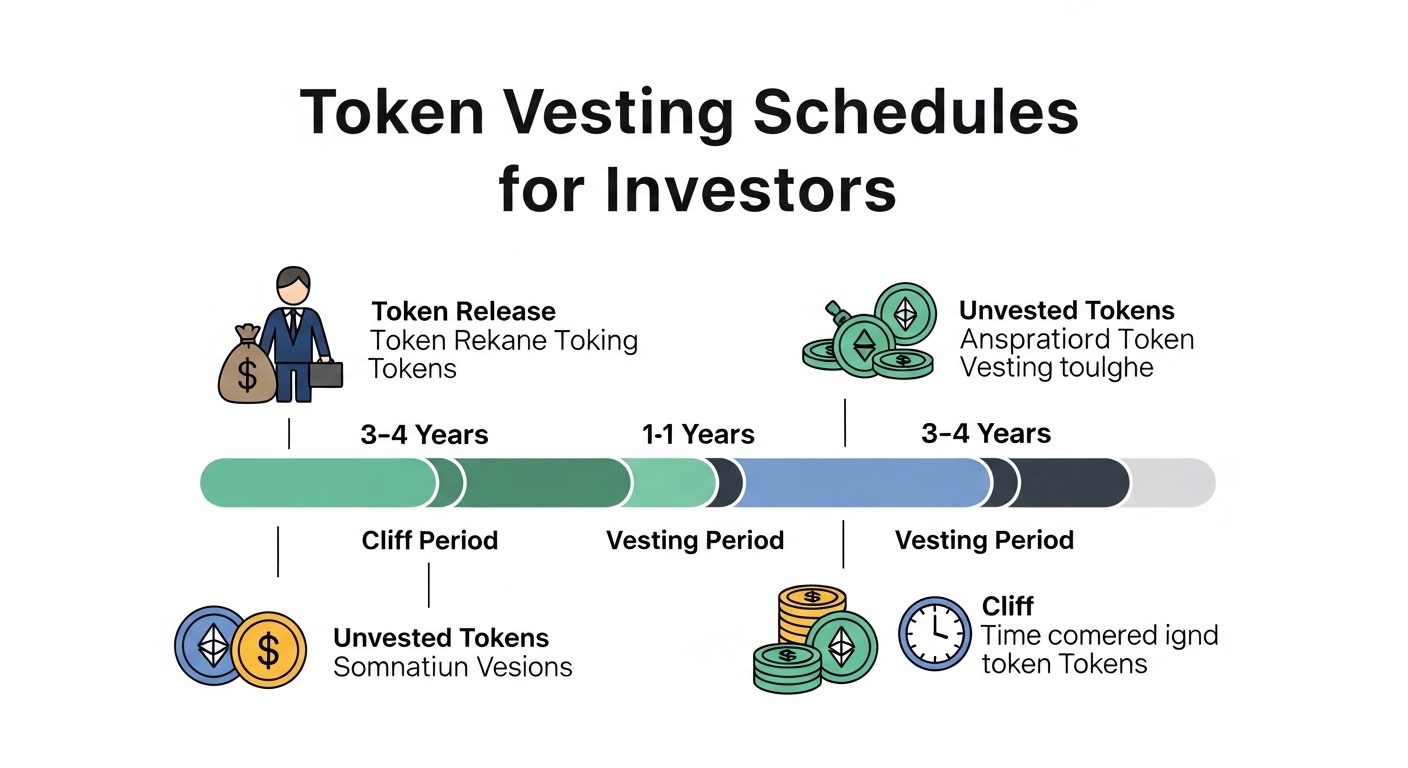
When it comes to investing in cryptocurrency, one term that you’ll frequently come across is token vesting schedules. These schedules are important for safeguarding investors and startups in the volatile landscape of digital assets, from Bitcoin to Ethereum and beyond.
Understanding how token vesting schedules work is crucial for understanding digital investments and promoting a balanced approach to risk and reward.
What Is Token Vesting?
Token vesting is a mechanism employed to regulate the distribution of tokens, typically within startups or projects launching Initial Coin Offerings (ICOs) or Token Sales. It serves as a buffer against immediate dilution of token value and aims to incentivize long-term commitment from investors and team members.
The concept is relatively straightforward: tokens are locked up for a certain period or until specific conditions are met. This system helps align the interests of investors and the project team, fostering stability and commitment throughout the investment journey.
What Types of Token Vesting Schedules Are Available?
Token vesting schedules come in various forms, each designed to structure the distribution of tokens in the cryptocurrency space. Understanding these types is essential for investors navigating the complexities of token investments.
Time-Based Vesting
Tokens are released gradually over a predetermined period, often in monthly or quarterly intervals. This approach promotes a steady and consistent distribution of tokens, encouraging long-term commitment.
Milestone-Based Vesting
Token release is contingent upon the achievement of specific milestones or goals set by the project. This model ties token distribution to project progress, ensuring that tokens are earned through tangible accomplishments.
Reverse Vesting
In this scenario, tokens are initially allocated to investors or team members, but these tokens can be reclaimed by the project if certain conditions are not met. Reverse vesting offers a level of protection for the project in cases where commitments are not fulfilled.
Why Is Token Vesting Important for Investors?
Token vesting schedules are crucial for investors as they provide a level of security and control over their investments. By having tokens released gradually or based on milestones, investors can protect themselves from sudden token dumps that could lead to market volatility.
Additionally, vesting schedules encourage project teams to maintain a long-term vision and commitment to project success, aligning their interests with those of the investors. This structured approach helps mitigate risks and fosters a more stable investment environment within the cryptocurrency space.
How Can You Capitalize on Token Vesting Schedules?
Understanding token vesting schedules in the cryptocurrency world requires a strategic approach and careful consideration. These practical tips serve as guiding principles for investors looking to navigate the ever-evolving landscape of digital assets.
Conduct Due Diligence
Before investing in projects with token vesting schedules, thoroughly research the project, the team behind it, and the specifics of the vesting terms. Understand the vesting periods, conditions, and potential risks associated with the vesting.
Diversify Your Portfolio
Spread your investments across various projects with different vesting structures to mitigate risks and optimize potential returns.
Seek Out Transparency
Look for projects that are transparent about their vesting schedules, milestones, and progress. Clear communication is key to building trust between investors and project teams.
Stay Informed
Stay updated on industry trends, regulatory changes, and market dynamics that could impact token vesting schedules and your investments.
What Are the Challenges and Risks Associated With Token Vesting?
Getting involved with token vesting schedules comes with its own set of challenges and risks that investors must be aware of. Understanding and mitigating these challenges is crucial for ensuring a well-informed and secure investment journey in the cryptocurrency space.
Market Volatility
Fluctuations in cryptocurrency prices can impact the value of tokens held under vesting schedules, potentially affecting the overall investment.
Project Failure
If a project fails to meet its milestones or achieve success, investors risk losing their investment or receiving devalued tokens.
Lack of Regulation
The unregulated nature of the cryptocurrency market poses challenges in ensuring the enforcement and fairness of token vesting schedules.
Vesting Manipulation
Some projects may use vesting schedules as a tool for manipulation, delaying token release, or altering terms to the detriment of investors.
Understanding Token Vesting for a Secure Investment Future
Using token vesting schedules in the cryptocurrency space requires a strategic and informed approach. By understanding the various types of vesting schedules, recognizing the associated challenges and risks, and staying abreast of future trends and innovations, investors can position themselves for success in this dynamic market.