
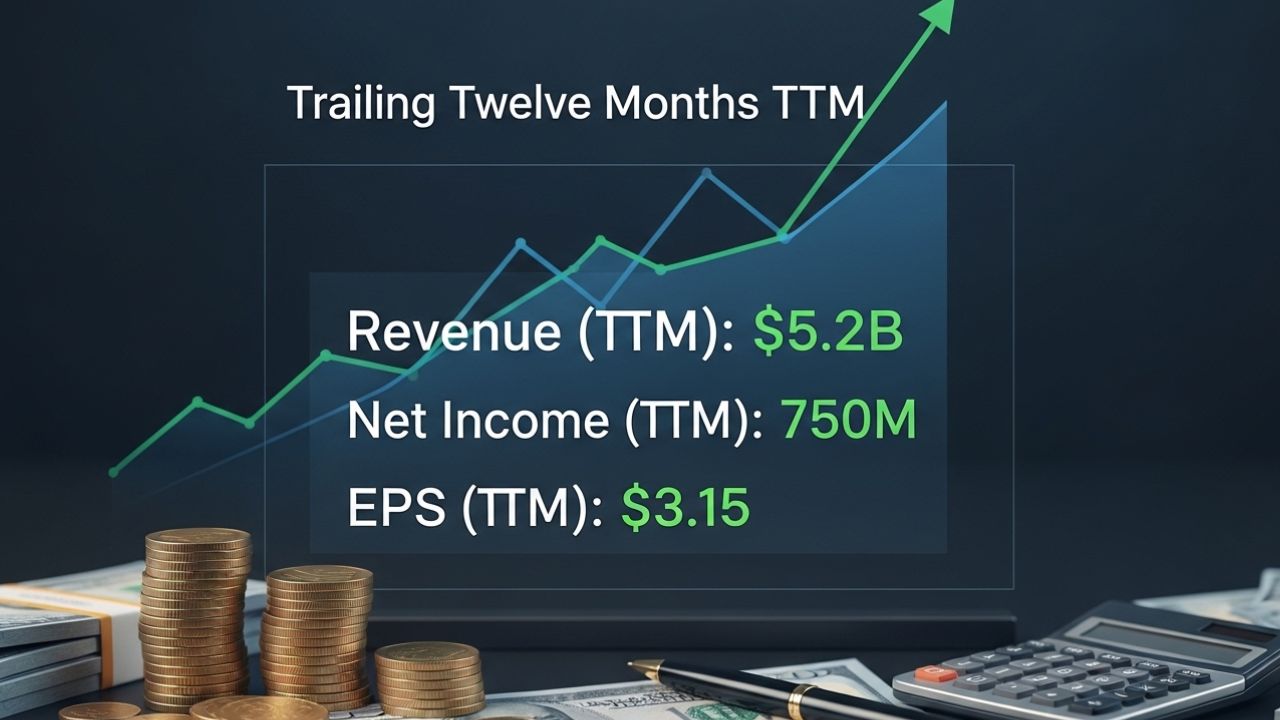
In the world of finance, the term TTM is widely used by investors, analysts, and business professionals. TTM in finance stands for Trailing Twelve Months, a metric that measures a company’s financial performance over the past 12 months. Unlike quarterly or annual reports, TTM provides a more up-to-date view of revenues, profits, and other financial indicators. Understanding TTM can help stakeholders make informed investment and business decisions by reflecting the most recent performance trends.
1. Definition and Concept of TTM in Finance
1.1 What TTM Means
TTM, or Trailing Twelve Months, refers to the total of a company’s financial results for the previous 12 consecutive months. This approach allows analysts to smooth out seasonal variations and gain a clearer picture of performance. For instance, if a company releases quarterly earnings, the TTM calculation aggregates the last four quarters to provide a continuous measure.
1.2 Difference Between TTM and Fiscal Year
While a fiscal year covers a fixed 12-month period, TTM is a rolling calculation. This means that as each month or quarter ends, TTM updates to include the most recent data and exclude the oldest month. This dynamic approach makes TTM especially useful for tracking trends in fast-changing industries.
2. How TTM is Calculated
Understanding the calculation of TTM is key to using it effectively in financial analysis.
2.1 Simple TTM Formula
The most common method to calculate TTM is:
TTM Value = Most Recent Fiscal Year Value + Most Recent Quarters’ Data – Overlapping Periods
For example, if analyzing revenue:
- Start with the revenue from the last full fiscal year.
- Add revenue from the most recent quarters not included in that year.
- Subtract the overlapping revenue to avoid double counting.
2.2 Example of TTM Calculation
Suppose a company reports:
- Q1 2025 revenue: $20M
- Q2 2025 revenue: $25M
- Q3 2025 revenue: $22M
- Q4 2025 revenue: $28M
- Fiscal year 2024 revenue: $90M
TTM Revenue = $90M + ($20M + $25M + $22M + $28M) – overlapping quarter(s)
This method ensures the TTM metric reflects the most current 12-month performance.
3. Key Metrics That Use TTM
TTM in finance is not limited to revenue. Many financial metrics rely on TTM to provide an accurate, up-to-date assessment:
3.1 TTM Revenue
Revenue over the trailing twelve months helps investors gauge sales trends and business growth.
3.2 TTM Earnings Per Share (EPS)
TTM EPS measures a company’s net income divided by outstanding shares over the past 12 months, offering insights into profitability.
3.3 TTM EBITDA
TTM EBITDA (Earnings Before Interest, Taxes, Depreciation, and Amortization) is used to assess operational performance without accounting for financing and accounting decisions.
3.4 TTM Free Cash Flow
Free cash flow over the trailing twelve months provides insights into liquidity and the company’s ability to fund operations, investments, or dividends.
4. Why TTM is Important in Finance
TTM is a critical metric because it reflects the most current financial health of a company. Some key advantages include:
- Up-to-Date Performance Analysis: Unlike annual reports, TTM accounts for recent changes in revenue and expenses.
- Smooths Seasonal Fluctuations: Businesses with cyclical sales, like retail or tourism, benefit from TTM analysis.
- Better Investment Decisions: Investors use TTM metrics to compare companies or assess stock valuation accurately.
- Helps Forecasting: Companies can use TTM data to project future performance based on recent trends.
5. Limitations of TTM
While TTM in finance is useful, it has certain limitations:
- Not Forward-Looking: TTM reflects past performance and may not predict future results.
- Ignores One-Time Events: Extraordinary gains or losses can skew TTM metrics.
- Requires Updated Data: Accurate TTM calculations depend on timely reporting of quarterly results.
- Less Useful for Long-Term Planning: Investors may also need annualized or multi-year trends for strategic decisions.
6. TTM vs. Other Financial Metrics
Understanding TTM’s role relative to other metrics helps in choosing the right financial tool:
| Metric | Time Frame | Use Case |
|---|---|---|
| TTM | Last 12 months | Up-to-date trend analysis |
| Fiscal Year | Fixed 12 months | Annual reporting and taxation |
| Quarter | 3 months | Short-term performance |
| Year-to-Date (YTD) | From Jan 1 to current date | Interim performance |
TTM bridges the gap between quarterly and annual reporting, offering a balanced view for analysts and investors.
7. Practical Applications of TTM
7.1 Stock Market Analysis
Investors often use TTM to calculate price-to-earnings (P/E) ratios, compare profitability across companies, or identify growth trends.
7.2 Business Performance Tracking
Companies track TTM revenue, EPS, and EBITDA to monitor ongoing performance and make informed operational decisions.
7.3 Financial Planning
TTM helps finance teams forecast cash flows, budgets, and funding requirements more accurately than static yearly data.
Conclusion:
In finance, TTM is an indispensable tool for measuring a company’s trailing twelve-month performance. By providing the most recent financial picture, TTM enables investors, analysts, and business managers to make informed decisions, account for seasonal variations, and track trends effectively. While it has limitations, combining TTM with other financial metrics ensures a well-rounded understanding of a company’s financial health.
Mastering TTM empowers stakeholders to analyze businesses with confidence, make smarter investment choices, and monitor performance in real-time, turning complex financial data into actionable insights.