
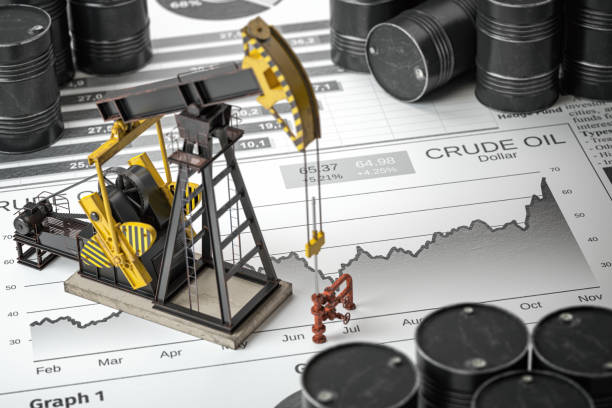
The oil market enters 2026 in a structurally different position from the supply-constrained environment that drove the 2021 to 2022 supercycle. Global production of petroleum and liquids is forecast to exceed global demand, resulting in persistent inventory builds. Brent crude averaged $69 per barrel in 2025 and is forecast to drop to $58 per barrel in 2026. WTI is separately forecast at $52 per barrel.
That doesn’t make the sector uninvestable. It does mean the macro backdrop rewards selectivity more than broad exposure, and that understanding which themes are driving each segment matters more than it did when rising prices lifted everything.
Key Themes Driving the Sector in 2026
Sector-level analysis of how to invest in oil stocks points toward several structural themes that reshape which companies are worth attention, regardless of the headline crude price. In an evergreen portfolio, the focus shifts from predicting the next price “tick” to identifying companies with the best operational efficiency.
LNG and Gas-Exposed E&P Names
LNG export demand, domestic power generation, and AI data center electricity use are creating multi-year tailwinds for gas-exposed exploration and production companies. Data centers require consistent, large-scale power that renewables alone can’t reliably provide at current infrastructure levels. Natural gas fills that gap, and producers with LNG contracts and low break-even costs are increasingly positioned to benefit from demand that has little to do with traditional oil consumption cycles.
Producers across the Permian Basin and key LNG export corridors are committing to expanded drilling programs, reflecting confidence in sustained gas demand even as crude price forecasts remain soft.
Geopolitical Risk as a Wildcard
Two geopolitical factors are worth monitoring closely in 2026:
- Strait of Hormuz disruption fears: Bank of America cited this risk in raising its Brent forecast. Roughly 20% of global oil supply passes through the strait. Any disruption, even a temporary one, would tighten supply faster than OPEC+ production decisions could offset
- Russian oil sanctions: Restrictions on Russian crude are reshaping global trade flows, redirecting barrels primarily toward China. This affects pricing in different regional markets and creates spread opportunities for producers and refiners with flexible offtake arrangements
Neither scenario is a base case, but both have a meaningful probability of affecting prices in ways that current forecasts don’t fully price in.
Inflation Hedge and Dividend Income
Oil stocks have historically served as effective inflation hedges and produce dividend income that outpaces fixed-income alternatives during upcycles. At current valuations, with crude prices compressing multiples across the sector, several names are offering dividend yields that look attractive relative to where they traded two years ago.
Midstream operators remain the most consistent income plays. MPLX LP carries a 7.31% dividend yield with an annual payout of $4.31 per share. Cheniere Energy Partners has maintained an uninterrupted dividend for 18 years at a 5.2% yield. For investors prioritizing income over price appreciation, the midstream segment offers yields that fixed income is struggling to match at current rates.
Segment Breakdown: What’s Working in Each Part of the Chain
Upstream
Upstream producers face the most direct pressure from softer crude prices. WTI at $52 per barrel tests the economics of higher-cost shale operations. The names that hold up best are those with Permian Basin exposure, low all-in sustaining costs, and strong free cash flow generation at $55 per barrel or below.
Vermilion Energy posted a 69.80% 12-week price change with projected EPS growth of 268.42%, illustrating the upside available in well-positioned upstream names even in a softer price environment. Eni achieved a 44.40% 12-week price change with a forward P/E of 13.31, reflecting how selective outperformance remains possible when fundamentals align.
Midstream
Fee-based revenue models insulate midstream operators from crude price swings. Pipeline and storage companies collect tolls on volume, not price, which makes their cash flows more predictable than upstream producers during periods of price uncertainty.
Energy Transfer, Hess Midstream, and MPLX are among the names offering 5% or higher forward dividend yields. For income-focused investors, midstream represents one of the more defensible positions in the sector heading into a year where crude price direction remains genuinely uncertain.
Downstream
Refiners and distributors care more about crack spreads than crude prices. A falling oil price can actually benefit downstream operators if consumer demand for refined products holds steady, since input costs drop while selling prices remain relatively firm.
Valero Energy, Marathon Petroleum, and Phillips 66 delivered returns of 82.67%, 63.44%, and 42.04% respectively in their strongest recent period, driven by favorable crack spread economics rather than crude price appreciation.
What Investors Should Be Watching
Heading into the second half of 2026, three variables are most likely to determine how the sector performs:
- OPEC+ production discipline through Q1 and Q2, which is the primary factor behind Mizuho’s mid-cycle recovery thesis
- LNG demand growth tied to power generation and data center infrastructure, which benefits gas-exposed E&P names regardless of crude price direction
- Geopolitical developments in the Strait of Hormuz and continued evolution of Russian oil trade flows, both of which can shift supply assumptions faster than demand-side changes
The sector offers different risk and return profiles depending on which part of the value chain an investor targets. Upstream for leverage to a potential price recovery, midstream for income and stability, downstream for exposure to consumer demand and refining margins. Getting that segmentation right is where the real work of oil stock investing in 2026 sits.