
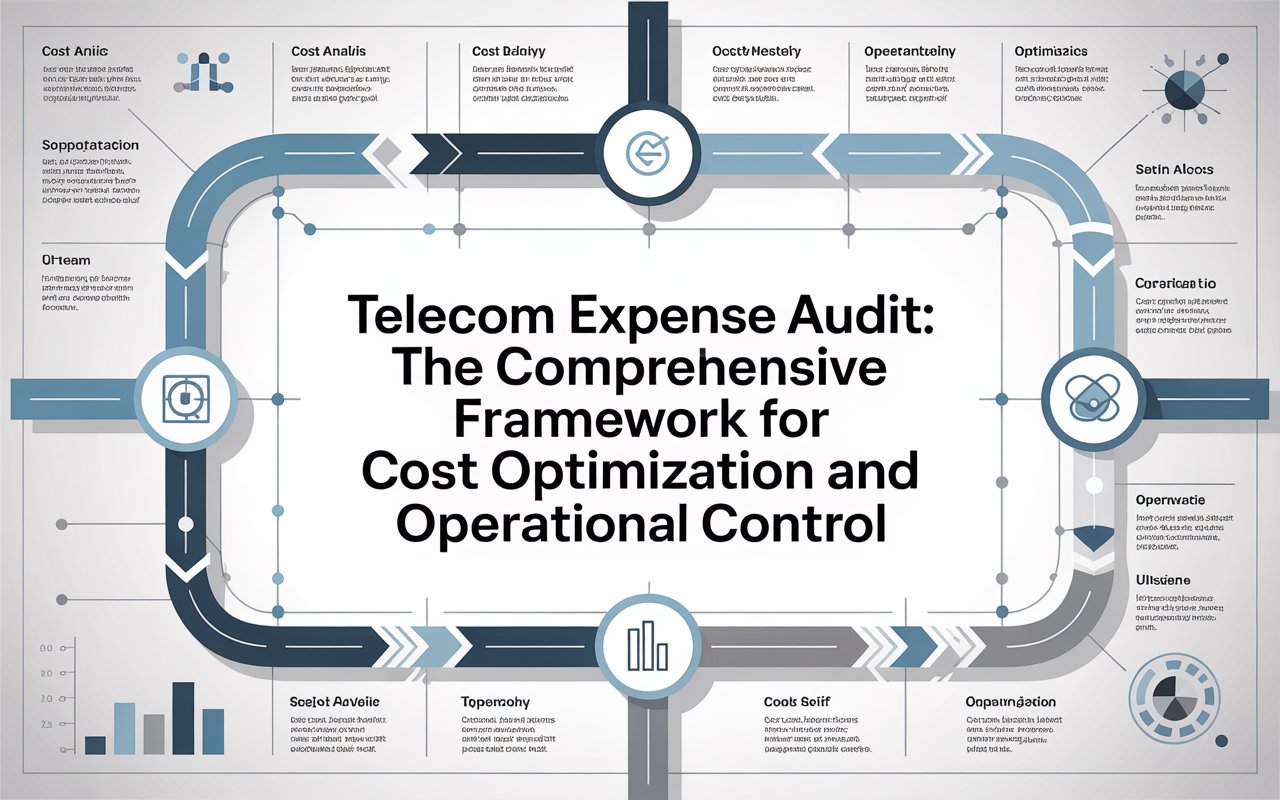
A telecom expense audit allows organizations to uncover hidden overspending, identify billing discrepancies, and regain full control over their communication infrastructure. As telecom environments grow more complex—with mobile devices, VoIP platforms, cloud communications, and multi-carrier networks—companies face increasing difficulty managing expenses accurately. We provide a streamlined, thorough audit methodology that ensures complete visibility, cost optimization, and sustainable financial control.
Understanding Telecom Expense Audits: What They Include and Why They Matter
A telecom expense audit is a deep evaluation of all telecom-related costs, contracts, services, and usage patterns within an organization. During this process, we verify accuracy, identify inefficiencies, and align services with actual business needs. Telecom invoices often contain errors, misapplied fees, outdated plans, and unauthorized add-ons. Without an audit, these issues can silently drain budgets for years.
An audit also ensures compliance with corporate procurement policies, contract terms, and industry regulations. As telecom providers update plans and pricing models regularly, companies must continuously confirm that their services match their operational requirements. Our auditing methodology combines data analytics, contract evaluation, service inventory verification, and benchmark comparisons to guarantee the most accurate and equitable telecom environment.
Why Organizations Overspend Without a Telecom Expense Audit
Businesses frequently overspend due to a lack of real-time visibility into telecom assets. Multiple carriers, decentralized procurement, and unmanaged mobility programs create opportunities for billing errors. Carriers also introduce surcharges and new pricing structures that companies may not immediately notice.
Additional causes of overspending include:
-
Redundant service lines
-
Uncancelled legacy services after technology upgrades
-
Misaligned rate plans for mobile devices
-
Unauthorized roaming charges
-
Outdated or non-negotiated contract terms
-
Inefficient bandwidth allocation
Our telecom expense audit process uncovers these issues and provides a corrective roadmap that reduces financial waste.
Key Components of an Effective Telecom Expense Audit
1. Invoice Validation and Billing Error Detection
We conduct a meticulous line-by-line review of invoices across all carriers. This evaluation reveals discrepancies such as:
-
Overcharges for services not rendered
-
Double billing
-
Incorrect taxes or regulatory fees
-
Misapplied discounts
Most organizations do not have the time or expertise to analyze billing data at this level of detail. Our audit team ensures complete accuracy and immediate corrections.
2. Telecom Inventory and Asset Verification
A telecom inventory includes all circuits, devices, SIM cards, VoIP extensions, and cloud communication accounts. Many companies lack a centralized inventory, making it difficult to identify unused or misallocated resources. We map every service to a user, location, or department to remove redundant items and optimize costs.
3. Contract and SLA Review
Telecom contracts often contain complex terms that leave room for misinterpretation. We evaluate:
-
Contract rates
-
Minimum spend commitments
-
SLAs
-
Renewal terms
-
Early termination clauses
Understanding these components helps organizations avoid penalties and negotiate better terms.
4. Usage Analysis and Plan Optimization
Organizations often pay for more data, bandwidth, or voice capacity than they need. Through precise usage analysis, we adjust plans to fit actual consumption patterns. This drives ongoing cost reductions.
How a Telecom Expense Audit Reduces Costs Immediately
A well-executed telecom expense audit delivers measurable financial benefits. Most companies experience cost reductions between 15% and 35% within the first audit cycle. Savings come from:
-
Identifying unused services
-
Eliminating billing errors
-
Renegotiating rates
-
Optimizing data and voice plans
-
Securing refunds and credits
-
Adjusting bandwidth and capacity
Beyond immediate savings, a telecom audit creates a foundation for long-term financial governance and procurement efficiency.
Telecom Expense Auditing for Large Enterprises
Large enterprises often manage thousands of devices, circuits, and accounts spread across multiple regions. This complexity increases the risk of overspending. Our enterprise-level audit services include:
-
Advanced automated invoice processing
-
Cloud-based telecom management dashboards
-
Multi-carrier cost allocation
-
Global service inventory mapping
With visibility across international carriers and billing structures, we deliver a unified audit framework capable of uncovering savings in even the most complex environments.
SMB Telecom Expense Audit: Tailored Solutions for Growing Companies
Small and medium-sized businesses often lack dedicated telecom management resources. Consequently, billing errors and unused services go unnoticed for years. We design SMB-focused audits that deliver maximum value with minimal disruption. These audits help SMBs:
-
Streamline voice and data plans
-
Eliminate outdated services
-
Implement scalable telecom strategies
-
Ensure stability as the business expands
This empowers smaller companies to operate with enterprise-grade precision and efficiency.
Cloud Communications and UCaaS Audit Analysis
With the rise of Unified Communications as a Service (UCaaS), many businesses now integrate messaging, calling, and video conferencing into a single platform. However, cloud communication subscriptions can become overly complex if not monitored. We analyze all UCaaS-related expenses to ensure that:
-
Licensing matches user needs
-
Duplicate subscriptions are removed
-
Add-on features align with business requirements
-
Legacy PBX costs are fully eliminated
This ensures organizations maintain cost-efficient communication infrastructures.
Telecom Expense Audit vs. Telecom Expense Management (TEM)
While both are related, a telecom expense audit and telecom expense management differ. A telecom audit is a one-time, intensive evaluation to uncover hidden costs and correct discrepancies. Telecom Expense Management (TEM) is an ongoing process that continuously monitors and optimizes telecom spending.
We provide both services, offering organizations a complete lifecycle approach to expense governance.
Implementing Recommendations After the Telecom Audit
Once an audit is complete, we provide a detailed implementation roadmap. This includes:
-
Removing redundant circuits
-
Switching to optimized rate plans
-
Negotiating with carriers
-
Updating service inventories
-
Improving procurement workflows
Our team assists with the implementation process to ensure that recommended changes translate into actual savings.
The Financial ROI of Telecom Expense Audits
Telecom expense audits consistently deliver high returns. For every dollar spent on an audit, companies typically save three to six dollars in recovered costs, optimized plans, and improved contract terms. The long-term ROI increases significantly when companies adopt ongoing expense management practices.
How Often Should a Telecom Expense Audit Be Conducted?
Telecom environments evolve rapidly due to technology upgrades, expanding remote work, and shifting carrier pricing. Most organizations benefit from conducting a telecom expense audit at least once per year. Businesses undergoing mergers or major IT transformations should consider more frequent audits.
Choosing the Right Telecom Audit Partner
A qualified telecom auditing partner must provide:
-
Carrier-agnostic expertise
-
Historical billing analysis
-
Industry benchmarking
-
Contract negotiation support
-
Transparent reporting
We deliver all these capabilities through a structured audit framework that ensures accuracy, accountability, and measurable cost reductions.
Conclusion
A telecom expense audit is essential for organizations seeking financial efficiency and operational control. With telecom infrastructures becoming more complex each year, businesses must ensure that every service, device, and contract aligns with actual needs and budget targets. By implementing a thorough audit, organizations recover lost revenue, minimize operational waste, and create a sustainable cost-management strategy. Our comprehensive telecom expense auditing framework empowers companies to regain full visibility, reduce unnecessary spending, and strengthen their long-term financial performance.
Pros & Cons of Telecom Expense Audits
Pros
1. Significant Cost Savings
A telecom expense audit helps organizations uncover hidden charges, billing errors, unnecessary services, and outdated plans. This often results in 15%–35% cost reductions immediately.
2. Improved Financial Transparency
Audits provide a clear picture of all telecom expenses, contracts, and services—giving businesses greater control and accountability over their spending.
3. Optimized Service Usage
Usage analysis ensures companies are only paying for services they actually need. This leads to better resource allocation and plan optimization.
4. Identification of Billing Errors
Telecom invoices often contain incorrect tax applications, duplicate charges, and misapplied rates. Audits expose these errors so companies can claim refunds and credits.
5. Enhanced Contract Negotiation
Audit findings strengthen negotiation power with carriers, allowing businesses to secure better rates, flexible terms, and improved SLAs.
6. Asset & Inventory Accuracy
A detailed audit helps build an accurate inventory of devices, circuits, SIM cards, VoIP accounts, and cloud communication tools, reducing waste and redundancy.
7. Long-Term Strategic Cost Control
Telecom audits lay the foundation for long-term expense management, budgeting, and governance frameworks.
Cons
1. Time-Consuming Process
A comprehensive telecom expense audit can take weeks or months, especially for large enterprises with multiple carriers and extensive service inventories.
2. Requires Technical Expertise
Understanding telecom billing structures, contracts, rate plans, and usage patterns is complex. Businesses often need external expertise, which may increase initial audit costs.
3. Potential Resistance from Internal Teams
Departments accustomed to existing services may resist changes, especially if the audit reveals unused lines or recommends discontinuing long-standing resources.
4. Upfront Costs
Although audits deliver strong ROI, there may be upfront fees for professional services—challenging for smaller organizations with limited budgets.
5. Carrier Pushback
Carriers sometimes delay credit requests or dispute audit findings, requiring additional effort and follow-up.
6. Temporary Operational Adjustments
Removing circuits, updating plans, or shifting carriers can create temporary disruptions if not managed carefully, especially during implementation.
7. Continuous Monitoring Still Needed
A one-time audit cannot maintain telecom efficiency forever. Organizations still need ongoing TEM (Telecom Expense Management) to prevent recurring overspending.
Frequently Asked Questions About Telecom Expense Audits
1. What is a telecom expense audit?
A telecom expense audit is a detailed review of all telecom services, invoices, contracts, and usage to identify billing errors, unnecessary charges, and opportunities to reduce costs. It ensures that your organization only pays for services it actually uses and that all billing is accurate.
2. How much money can a telecom expense audit save my company?
Most organizations see savings between 15% and 35% on their telecom spending after an audit. In some cases—with extensive billing errors or unused services—savings can be significantly higher. This includes refunds, credits, and long-term reductions in monthly bills.
3. How long does a telecom expense audit take?
The duration depends on the size and complexity of your telecom environment.
Typical timelines:
-
Small businesses: 2–4 weeks
-
Mid-sized organizations: 4–8 weeks
-
Large enterprises: 8–16 weeks or longer
More carriers, circuits, devices, and locations generally increase audit time.
4. Do I need to share sensitive company information during the audit?
Only telecom-related information is required, such as invoices, contracts, carrier agreements, and service inventories. Professional auditing firms follow strict confidentiality and data-security standards to protect your information.
5. Will the audit disrupt daily operations?
No. Telecom audits are primarily analytical and done in the background. Any service adjustments or cancellations recommended after the audit are scheduled to minimize operational impact and avoid downtime.
6. What types of telecom expenses are included in an audit?
A telecom expense audit typically covers:
-
Mobile plans and devices
-
VoIP and landline services
-
Internet circuits and bandwidth
-
Cloud communications (UCaaS, CCaaS)
-
Conferencing and collaboration tools
-
Data services and network charges
Anything billed by a telecom or connectivity provider is included.
7. How often should a company conduct a telecom expense audit?
Most organizations benefit from a full audit once per year to stay aligned with changing technology, carrier pricing, and organizational needs. Companies undergoing rapid growth, mergers, or digital transformation may require more frequent audits.
8. What happens after the telecom audit is completed?
A detailed report is delivered, highlighting billing errors, cost-saving opportunities, unused services, and optimization recommendations. Implementation steps may include plan adjustments, contract renewals, deactivations, or carrier negotiations.
9. Can a telecom audit help with contract negotiation?
Yes. Audit findings strengthen your negotiation position with carriers by providing real usage data, benchmark pricing, and documented billing discrepancies. This leads to better rates and more favorable contract terms.
10. Is telecom expense management (TEM) the same as a telecom audit?
No. A telecom audit is a one-time deep review, while Telecom Expense Management (TEM) is an ongoing, continuous process that monitors usage, validates invoices monthly, and prevents future overspending.