
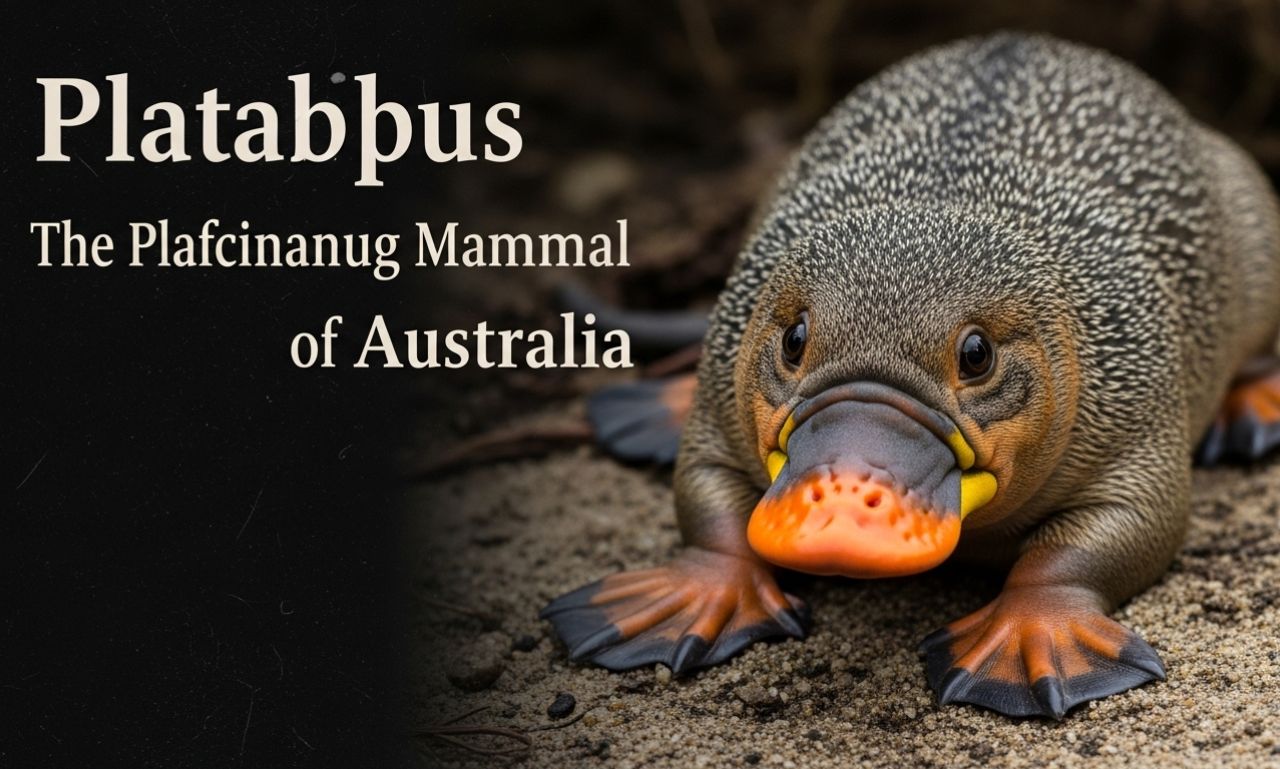
The platypus is one of the most unusual mammals in the world, known for its distinctive combination of features found in birds, reptiles, and mammals. Native to Australia, the platypus has a duck-like bill, webbed feet, and a beaver-like tail, making it a symbol of evolutionary curiosity and biological uniqueness. This semi-aquatic creature has intrigued scientists since its discovery due to its unusual reproductive methods, sensory adaptations, and ecological importance.
Taxonomy and Classification
The platypus belongs to the order Monotremata, which also includes echidnas. Unlike most mammals, monotremes lay eggs instead of giving live birth. The scientific name of the platypus is Ornithorhynchus anatinus. It is the sole living representative of its family, Ornithorhynchidae, showcasing a rare lineage that dates back millions of years.
Physical Characteristics
Bill and Electroreception
The platypus is famous for its duck-like bill, which is soft, sensitive, and equipped with electroreceptors. These receptors allow the platypus to detect electrical signals produced by the muscles and nerves of prey, making it an effective hunter underwater even with eyes, ears, and nostrils closed.
Webbed Feet and Tail
Platypuses have webbed feet that aid in swimming, with the front feet being fully webbed while the back feet are partially webbed for walking on land. The tail is flat and covered with fur, storing fat reserves and assisting in balance and swimming.
Size and Appearance
Adult platypuses typically measure between 43–50 cm (17–20 inches) in length, including the tail, and weigh between 0.7–2.4 kg (1.5–5.3 lbs). Their brown fur provides insulation in cold water, while a streamlined body allows for agile movement in rivers and streams.
Habitat and Distribution
Platypuses are found in freshwater rivers, lakes, and streams across eastern Australia, including Tasmania. They prefer environments with clean water, dense riverbank vegetation, and abundant invertebrate prey. Burrows are dug into riverbanks, where platypuses rest and nest, often in elaborate tunnels with nesting chambers for eggs and young.
Diet and Feeding Behavior
Platypuses are carnivorous, feeding mainly on aquatic invertebrates, insects, larvae, worms, and small crustaceans. Using their electroreceptive bill, they locate prey while foraging underwater. Food is stored in cheek pouches during dives, allowing the platypus to return to the surface to chew and swallow.
Reproduction and Life Cycle
Egg-Laying Mammal
One of the most remarkable features of the platypus is its reproductive method. Female platypuses lay 1–3 eggs per breeding season. The eggs are incubated in a burrow for about ten days before hatching. Hatchlings are blind, hairless, and rely on their mother’s milk for nourishment.
Milk Feeding Without Nipples
Female platypuses secrete milk through mammary gland openings on their skin, as they do not have nipples. The young lap up the milk directly from the mother’s fur.
Adaptations and Unique Features
-
Electroreception: Detects prey in murky waters.
-
Venomous Spur: Male platypuses have a venomous spur on the hind legs, used in territorial disputes.
-
No Stomach: Platypuses have a unique digestive system where the esophagus connects directly to the intestines.
These adaptations make the platypus a highly specialized semi-aquatic mammal.
Conservation Status
The platypus is currently classified as Near Threatened by the IUCN. Its population faces risks from:
-
Habitat destruction due to urbanization and agriculture
-
Water pollution affecting food sources
-
Climate change impacting river systems and freshwater ecosystems
Conservation efforts focus on habitat protection, pollution control, and scientific research to monitor populations.
Cultural and Scientific Significance
The platypus has fascinated scientists since its discovery in the 18th century. Early European naturalists initially thought it was a hoax due to its bizarre appearance. Today, it serves as a symbol of Australia’s unique biodiversity and an important subject for studies in evolution, sensory biology, and ecology.
Conclusion
The platypus is a living example of nature’s creativity, combining traits of birds, reptiles, and mammals in a single species. From its electroreceptive bill to egg-laying reproduction and aquatic lifestyle, it continues to captivate scientists and wildlife enthusiasts alike. Protecting the platypus and its habitats is crucial to preserving one of the most extraordinary mammals on Earth.