
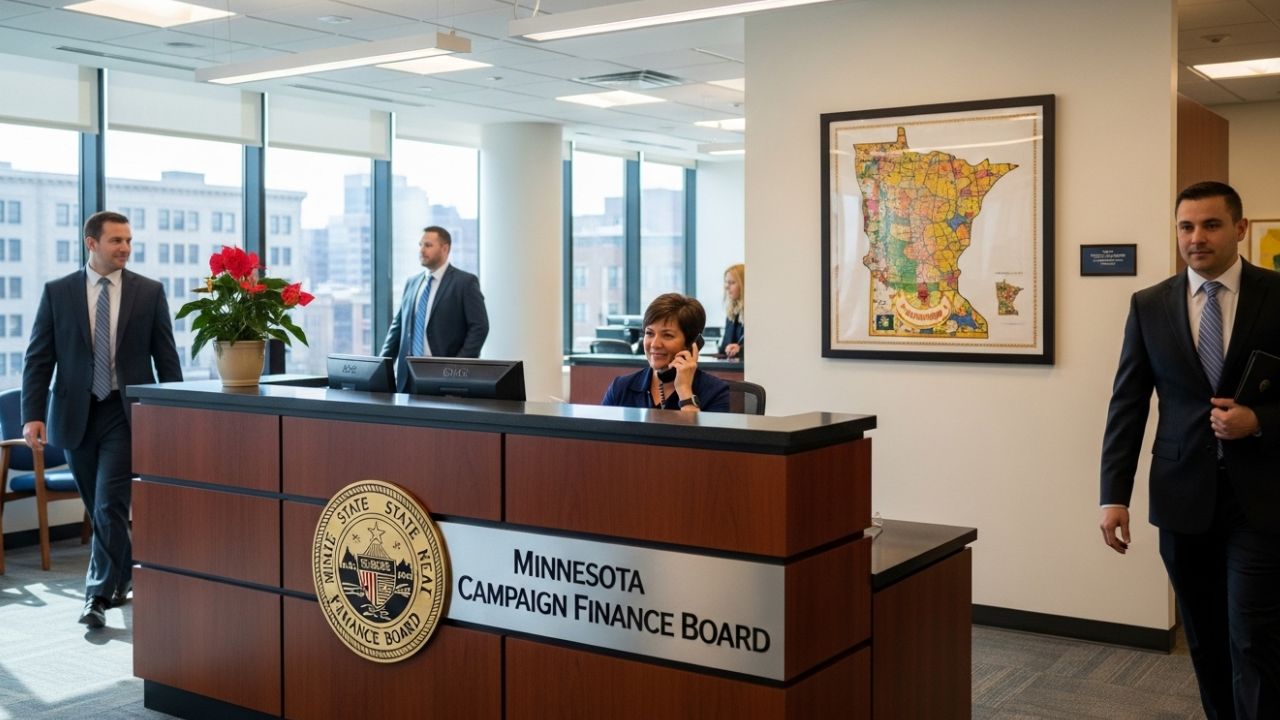
The Minnesota Campaign Finance Board — formally known as the Minnesota Campaign Finance and Public Disclosure Board — is the primary state agency responsible for regulating and disclosing campaign finance and political spending in Minnesota. It ensures transparency and accountability in how money is raised and spent in state elections and lobbying activities.
Since its creation, the Board has played a critical role in helping Minnesotans understand who fundspolitical campaigns, how much is spent, and whether candidates and organizations follow the law.
What Is the Minnesota Campaign Finance Board?
Definition and Mission
The Minnesota Campaign Finance Board is a bipartisan, six‑member body established by the Minnesota Legislature under the Campaign Finance and Public Disclosure Act (Minnesota Statutes Chapter 10A).
The Board’s mission is to promote public confidence in government decision‑making by enforcing disclosure laws and administering public financing and lobbying registration programs.
Structure and Appointments
Board Composition
- The Board has six members
- Members are appointed by the Governor
- Appointments require confirmation by a three‑fifths vote of both the Minnesota House and Senate
Appointments are made on a bipartisan basis to ensure balanced representation.
Key Responsibilities of the Board
1. Campaign Finance Disclosure
The Board oversees filings from candidates, committees, and political parties that are involved in Minnesota state elections, requiring them to report:
- Funds raised
- Spending amounts
- Contributor information
These financial reports help voters see where campaign money comes from and how it is used.
2. Lobbyist Registration and Disclosure
Lobbyists and their principals must register with the Board and file reports detailing expenditures made to influence state legislative and administrative actions.
3. Public Officials’ Financial Disclosure
Elected and certain appointed officials are required to file statements of economic interest each year. These filings disclose:
- Income sources
- Financial holdings
- Potential conflicts of interest
4. Public Subsidies and Campaign Funding Programs
The Board administers public financing programs designed to offer partial campaign funding to eligible candidates under certain agreements, lessening the reliance on large private contributions.
How the Board Ensures Transparency
Public Access to Data
Minnesotans can access campaign finance information — including contributions and expenditures — through the Board’s online system, which publishes searchable data on:
- Candidate finances
- Committees and funds
- Lobbyist reports
- Party unit filings
This transparency helps citizens monitor political spending and hold officials accountable.
Training and Resources
The Board provides tools and educational resources for:
- Candidates
- Treasurers
- Lobbyists
- Public officials
These resources include online videos, manuals, and live training to help filers comply with reporting requirements.
Why the Minnesota Campaign Finance Board Matters
Promoting Fair Elections
By requiring disclosure of campaign contributions and expenditures, the Board helps:
- Prevent hidden influence in politics
- Reduce the impact of large donors
- Inform voters about campaign finances
This transparency strengthens trust in the democratic process.
Supporting Ethical Governance
Through economic disclosure and gift prohibition rules, the Board helps identify potential conflicts of interest among public officials.
Challenges and Issues
At times, the Board has faced administrative challenges — such as operating without a full quorum when appointments were delayed — which can limit its ability to enforce laws and issue decisions. For example, in 2021, the board was unable to function fully due to unconfirmed appointments.
Despite this, efforts continue to ensure the Board remains effective and responsive to changes in campaign finance trends.
Conclusion
The Minnesota Campaign Finance Board is a critical institution for ensuring transparency and integrity in state politics. By overseeing how money flows in elections, requiring financial disclosures from officials and lobbyists, and administering public funding programs, the Board helps Minnesotans understand and trust the state’s political process. Its work supports fair campaigning, reduces the potential for corruption, and gives citizens insight into political spending and influence.