
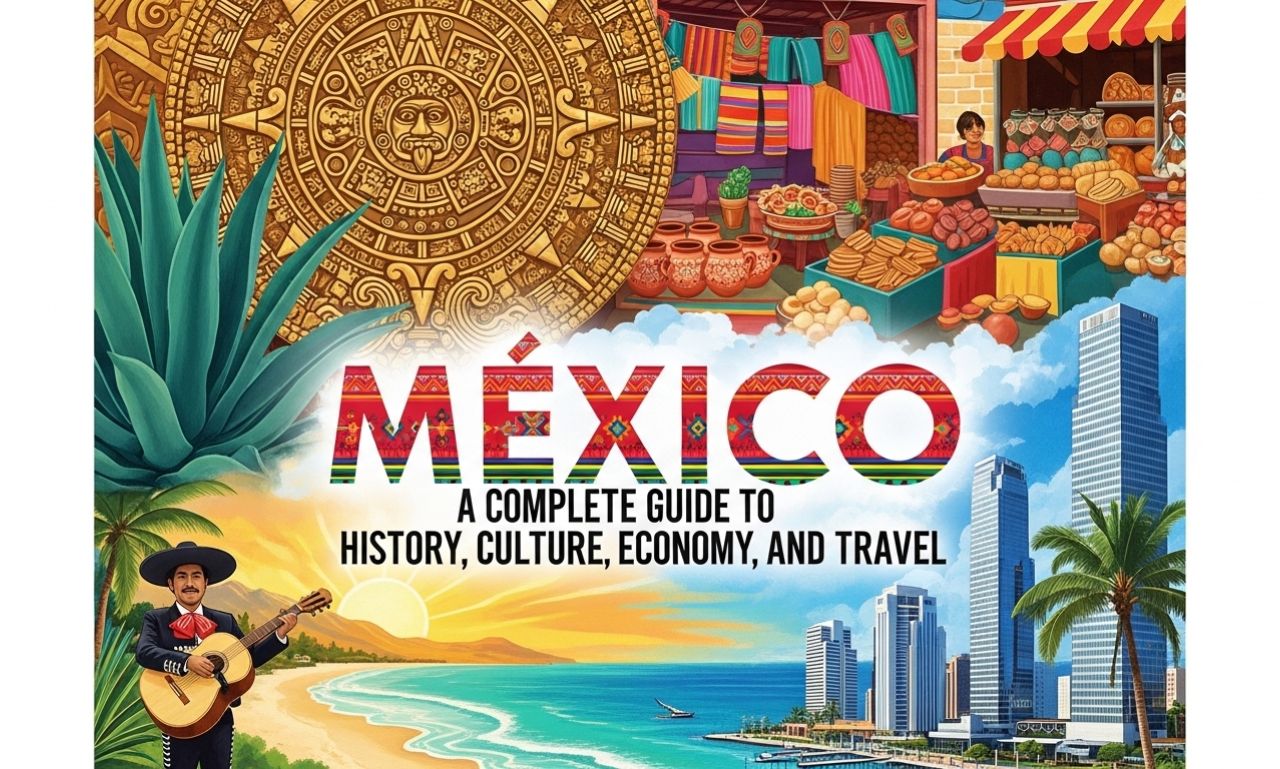
Mexico is a country known for its deep history, vibrant traditions, and global cultural influence. Located in North America, Mexico bridges ancient civilizations with modern development, making it one of the most fascinating nations in the world. From its indigenous roots and colonial past to its modern economy and tourism industry, Mexico plays a vital role on the global stage.
With diverse landscapes, strong cultural identity, and a growing economy, Mexico attracts millions of visitors and investors every year.
Geography and Location of Mexico
Mexico is situated in the southern part of North America, bordered by the United States to the north and Guatemala and Belize to the south. It is flanked by the Pacific Ocean on the west and the Gulf of Mexico and Caribbean Sea on the east.
The country’s geography includes deserts, rainforests, mountains, beaches, and plateaus. This diversity contributes to Mexico’s rich biodiversity and varied climate, ranging from arid regions in the north to tropical environments in the south.
History of Mexico
The history of Mexico dates back thousands of years. Ancient civilizations such as the Maya, Aztec, and Olmec laid the foundation for Mexican culture, architecture, and science.
In the 16th century, Spanish colonization reshaped Mexico’s political and social structure. After centuries of colonial rule, Mexico gained independence in 1821. The country has since experienced revolutions, reforms, and modernization, shaping its current democratic system.
Mexico’s history remains visible today through its archaeological sites, colonial cities, and cultural traditions.
Culture and Traditions in Mexico
Mexico is world-famous for its vibrant culture. Mexican traditions blend indigenous customs with Spanish influences, creating a unique national identity.
Key cultural elements include:
-
Traditional music such as mariachi
-
Colorful festivals like Día de los Muertos
-
Regional clothing and folk dances
-
A strong emphasis on family and community
Mexican cuisine, recognized by UNESCO, is another major cultural highlight. Dishes such as tacos, tamales, mole, and enchiladas are enjoyed worldwide.
Economy of Mexico
The economy of Mexico is one of the largest in Latin America. It is a major exporter of manufactured goods, oil, agricultural products, and automobiles. Mexico also benefits from strong trade relationships, particularly through agreements like USMCA.
Key economic sectors include:
-
Manufacturing and automotive production
-
Agriculture and food exports
-
Energy and oil production
-
Tourism and services
Mexico’s growing middle class and strategic location make it an important hub for global trade and investment.
Tourism in Mexico
Tourism plays a vital role in Me xico’s economy. Millions of visitors travel to Me xico each year to experience its beaches, historical landmarks, and cultural attractions.
Popular destinations include:
-
Cancún and Riviera Maya for beaches
-
Me xico City for history and museums
-
Oaxaca for culture and cuisine
-
Los Cabos and Puerto Vallarta for resorts
M exico offers a wide range of travel experiences, from luxury resorts to eco-tourism and cultural exploration.
Education and Society in Mexico
Education in Me xico has improved significantly over recent decades. Public and private universities contribute to research, innovation, and workforce development. Literacy rates continue to rise, and digital education initiatives are expanding access.
Mexican society values tradition while embracing modernization. Social life often centers around family, celebrations, and shared meals, reinforcing strong community bonds.
Mexico in Global Affairs
Me xico plays an important role in international politics and diplomacy. As a member of organizations such as the United Nations, G20, and World Trade Organization, Me xico actively participates in global decision-making.
Its strategic location and economic ties make Mexico a key partner in trade, migration discussions, and regional cooperation.
Challenges and Opportunities in Mexico
Like many nations, Me xico faces challenges including economic inequality, infrastructure development, and security concerns. However, ongoing reforms and investments continue to create opportunities for growth.
Innovation, renewable energy, tourism expansion, and manufacturing advancements position Me xico for a strong future in the global economy.
Conclusion:
Me xico is a country of immense cultural richness, historical depth, and economic significance. Its blend of ancient traditions and modern development makes it a unique and influential nation.
Whether viewed through its history, culture, economy, or tourism, Me xico continues to shape global culture and commerce. Understanding Me xico provides valuable insight into one of the world’s most dynamic and resilient countries.