
Understanding what is IRR in finance is essential for evaluating investments and making smart financial decisions. IRR stands for Internal Rate of Return, a key metric used by investors, companies, and analysts to measure the profitability of a project or investment.
In simple terms, IRR tells you the rate at which an investment breaks even, meaning the point where profits equal costs.
What Is IRR in Finance?
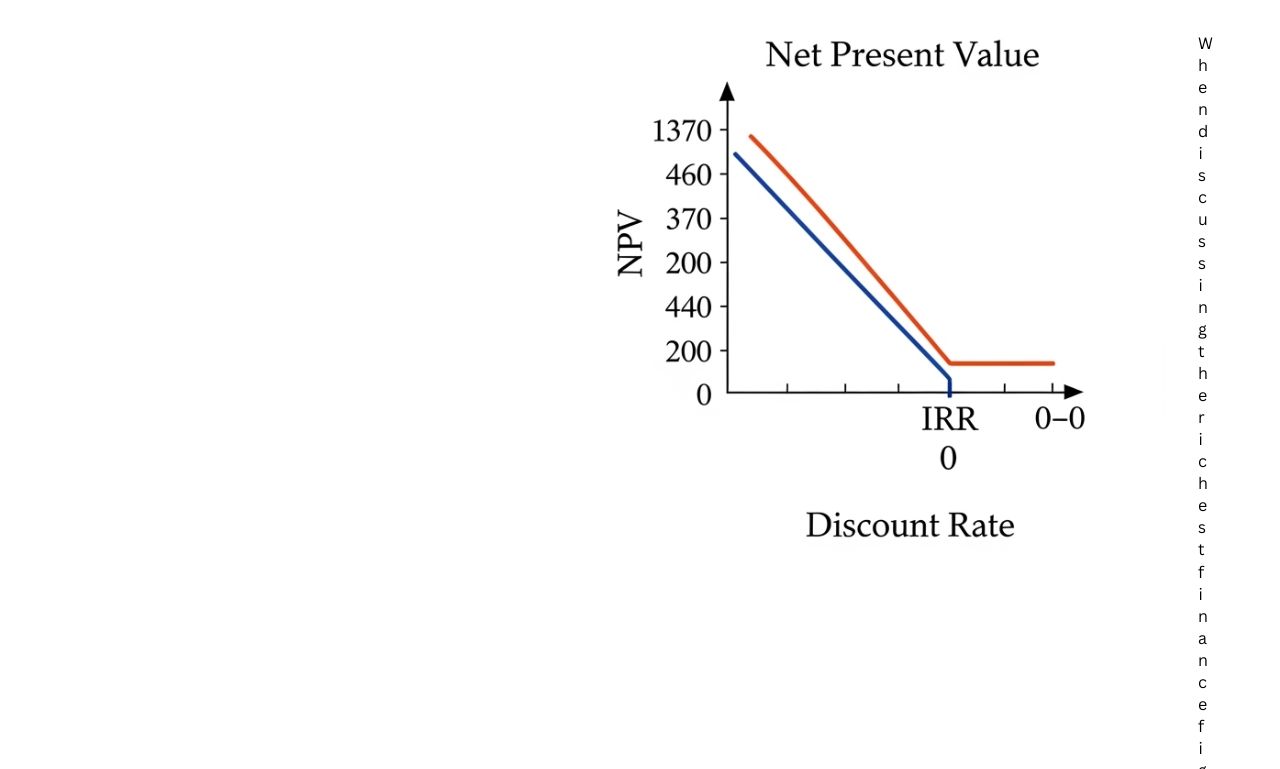
The Internal Rate of Return (IRR) is the discount rate that makes the net present value (NPV) of all cash flows from an investment equal to zero.
In simpler words:
- It is the percentage return an investment is expected to generate over time
- It helps determine whether a project is profitable or not
If the IRR is higher than the required rate of return, the investment is considered good.
Why IRR Is Important in Finance
1. Helps Evaluate Investments
IRR allows investors to:
- Compare different investment opportunities
- Choose projects with higher returns
- Make data-driven decisions
2. Measures Profitability
A higher IRR means:
- Higher expected return
- Better investment performance
3. Useful in Capital Budgeting
Companies use IRR to decide whether to:
- Start new projects
- Invest in equipment
- Expand operations
4. Helps Compare Projects
IRR makes it easier to compare:
- Different projects
- Different investment options
- Different time periods
IRR Formula in Finance
The IRR is calculated using the formula where:
NPV=∑Cash Flows(1+IRR)t−Initial Investment=0NPV = \sum \frac{Cash\ Flows}{(1 + IRR)^t} – Initial\ Investment = 0
Where:
- Cash Flows = income generated by the investment
- t = time period
- IRR = Internal Rate of Return
Because this involves solving a complex equation, IRR is usually calculated using financial calculators or software like Excel.
Example of IRR in Finance
Suppose you invest $1,000 in a project and receive:
- $400 in Year 1
- $400 in Year 2
- $400 in Year 3
The IRR is the rate at which the total value of these cash flows equals your initial investment.
If the IRR is:
- 10% → The investment is acceptable
- Higher than 10% → The investment is attractive
- Lower than 10% → The investment may not be worth it
IRR vs ROI (Return on Investment)
| Feature | IRR | ROI |
|---|---|---|
| Time factor | Considers time value of money | Does not consider time |
| Accuracy | More accurate for long-term investments | Simple but less precise |
| Usage | Investment analysis | General performance measurement |
IRR is more advanced because it includes the time value of money, making it a better tool for financial decision-making.
Advantages of IRR
- Considers time value of money
- Easy to compare investments
- Useful for long-term projects
- Helps in capital budgeting decisions
- Widely used in finance and investment analysis
Limitations of IRR
- Difficult to calculate manually
- Can give multiple results in some cases
- Assumes reinvestment at the same rate
- May not always give accurate results for irregular cash flows
Because of these limitations, IRR is often used along with other metrics like NPV.
When Should You Use IRR?
IRR is commonly used when:
- Evaluating investment opportunities
- Analyzing business projects
- Comparing financial returns
- Making capital budgeting decisions
- Assessing real estate investments
Conclusion
Understanding what is IRR in finance is essential for making informed investment decisions. IRR helps measure the profitability of an investment by calculating the expected rate of return over time.
While it has some limitations, IRR remains one of the most important tools in financial analysis. By using IRR alongside other metrics like NPV, investors and businesses can make smarter and more accurate financial decisions.