
Last updated: August 23, 2026
Our Experience:
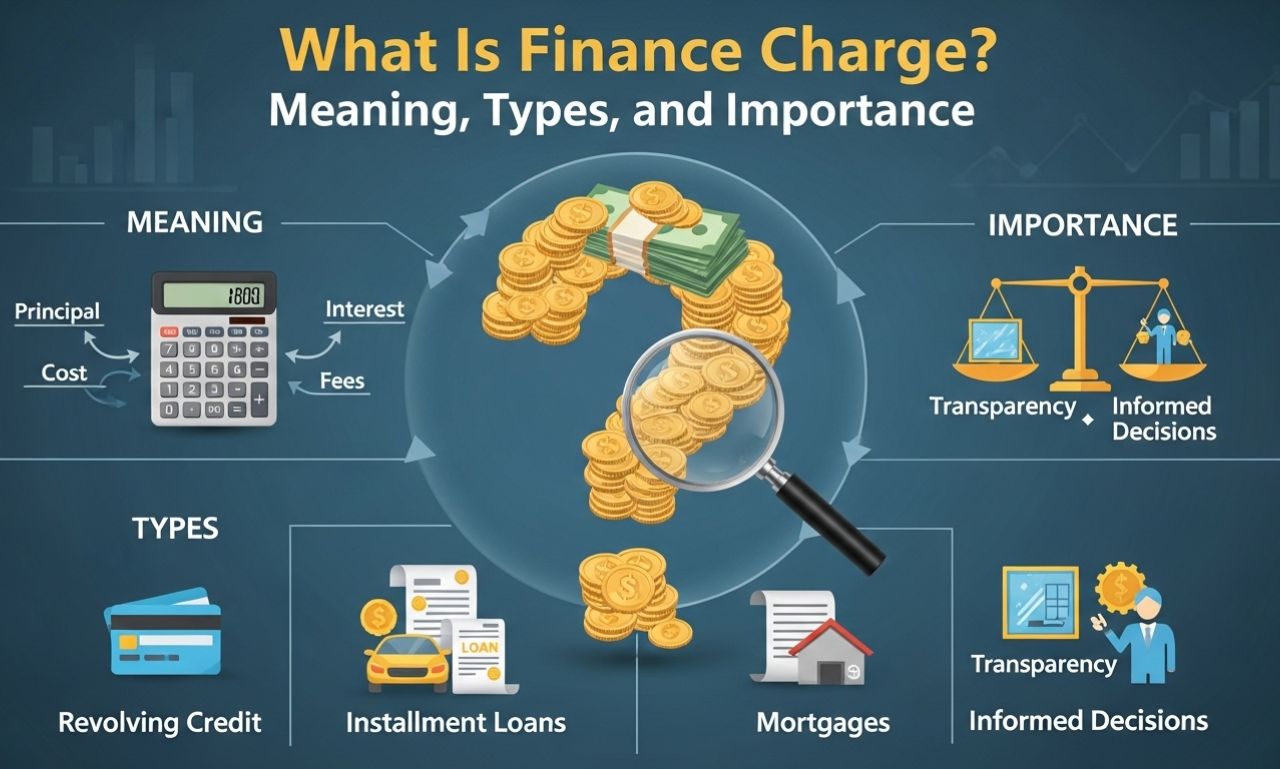
A finance charge is the total cost you pay for borrowing money or using credit. It includes interest and other fees that lenders charge when you do not pay your balance in full or when you take out a loan.
Understanding what is fin ance charge is important because it helps you see the true cost of credit and make better financial decisions. Whether you are using a credit card, taking a loan, or financing a purchase, finance charges can significantly affect how much you pay over time.
What Is Finance Charge in Simple Terms
A finance charge is the price of borrowing money. When you borrow from a bank, credit card company, or lender, they charge you extra for providing that money.
This charge may include:
- Interest on the borrowed amount
- Service fees
- Late payment fees
- Other administrative charges
In simple terms, the more you delay repayment, the more finance charge you pay.
Types of Finance Charges1. Interest Charges
Interest is the most common part of a finance charge. It is calculated as a percentage of the amount you owe.
For example:
- Credit card balances
- Personal loans
- Mortgages
The interest increases over time if you do not repay quickly.
2. Late Payment Fees
If you miss a payment deadline, lenders may charge a late fee. This is added to your finance charge and increases your total debt.
3. Service and Processing Fees
Some lenders add fees for:
- Processing loans
- Maintaining accounts
- Annual membership (like credit cards)
These fees are also part of the overall finance charge.
4. Cash Advance Charges
When you withdraw cash using a credit card, lenders often charge:
- A higher interest rate
- Additional cash advance fees
This makes cash withdrawals more expensive than regular purchases.
How Finance Charge Is Calculated
The calculation of finance charge depends on the type of loan or credit. Most commonly, it is based on:
- Outstanding balance
- Interest rate (APR – Annual Percentage Rate)
- Billing cycle
Example Calculation
If you owe $1,000 on a credit card with a 12% annual interest rate:
- Monthly interest ≈ 1%
- Finance charge = $10 per month (if unpaid balance remains)
The longer the balance remains unpaid, the higher the total finance charge becomes.
Why Finance Charges Matter
1. True Cost of Borrowing
Finance charges show the real cost of using credit. Without understanding them, you may underestimate how much you actually pay.
2. Impact on Debt
High finance charges can:
- Increase your debt quickly
- Make repayment harder
- Lead to long-term financial stress
3. Encourages Timely Payments
Knowing about finance charges encourages you to:
- Pay bills on time
- Avoid unnecessary fees
- Reduce interest costs
Finance Charge on Credit Cards
Credit cards are one of the most common places where finance charges apply.
If you:
- Pay your full balance on time → No finance charge
- Carry a balance → Interest is charged
Credit card companies often offer a grace period, allowing you to avoid finance charges if you pay in full before the due date.
Finance Charge in Loans
Finance charges are also applied to:
- Personal loans
- Auto loans
- Home mortgages
These charges are usually included in your monthly installment and depend on:
- Loan amount
- Interest rate
- Loan duration
How to Reduce Finance Charges
You can lower finance charges by:
- Paying your full balance on time
- Making extra payments when possible
- Choosing loans with lower interest rates
- Avoiding unnecessary borrowing
- Managing credit responsibly
Common Mistakes to Avoid
- Ignoring interest rates before borrowing
- Missing payment deadlines
- Only paying minimum balances
- Taking high-interest loans without comparison
Avoiding these mistakes can help you reduce finance charges significantly.
Conclusion
Understanding what is fina nce charge is essential for managing your money wisely. It represents the total cost of borrowing and includes interest, fees, and penalties.
By staying informed, paying on time, and managing credit carefully, you can reduce finance charges and improve your financial health.