
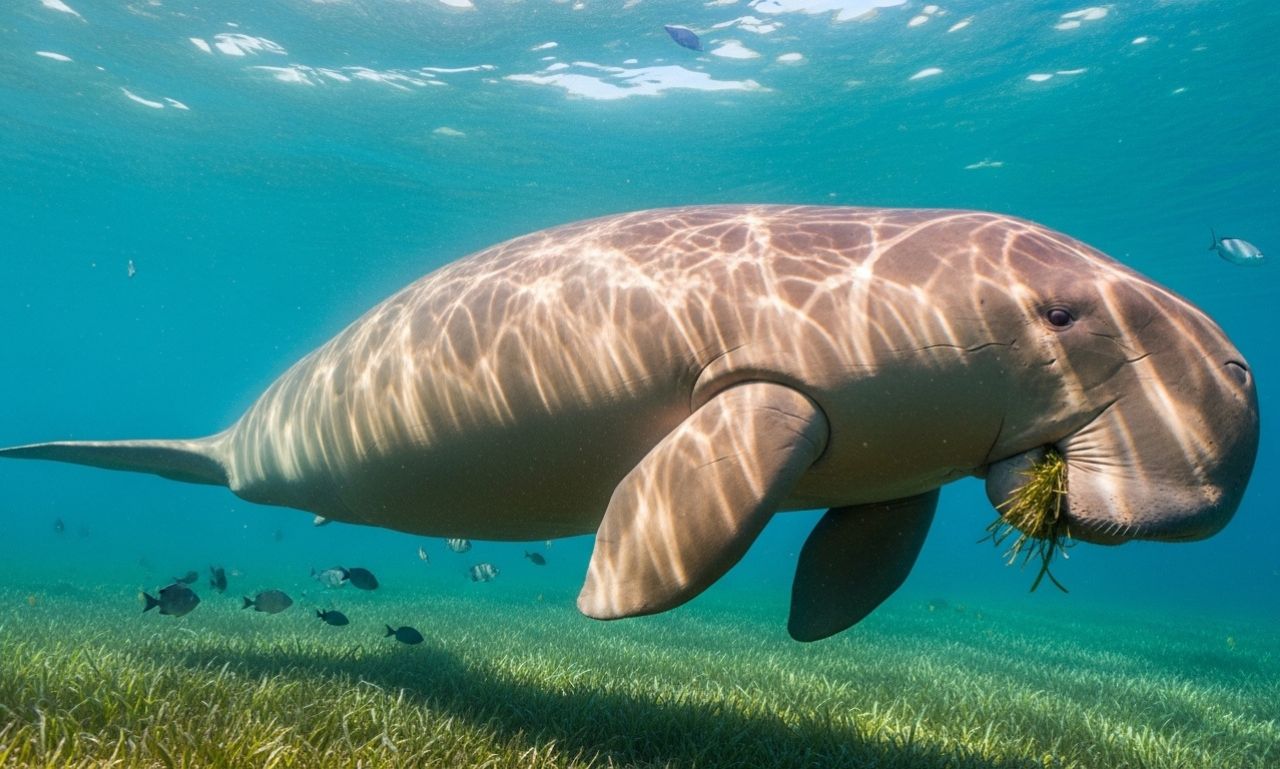
The Dugong is a fascinating marine mammal known for its gentle nature and unique appearance. Often called the “sea cow,” the dugong feeds mainly on seagrass and lives in warm coastal waters across the Indo-Pacific region. As one of the few herbivorous marine mammals, the dugong plays an important role in maintaining healthy marine ecosystems.
Despite its ecological importance, the dugong is considered a vulnerable species due to habitat loss and human activity.
What Is a Dugong?
The dugong is a large marine mammal belonging to the order Sirenia, which also includes the Manatee. Dugongs are the only surviving species in the family Dugongidae.
Key physical characteristics include:
-
A streamlined body adapted for swimming
-
A broad tail similar to that of a dolphin
-
Thick, smooth skin
-
A downward-facing snout for grazing on seagrass
Adult dugongs can grow up to 3 meters (10 feet) long and weigh between 250 and 400 kilograms.
Habitat and Distribution
Du gongs live in warm, shallow coastal waters, especially in areas with abundant seagrass beds. Their range stretches across the Indo-Pacific region, including:
-
Northern Australia
-
The Red Sea
-
Coastal regions of East Africa
-
Southeast Asia
-
Parts of the India and surrounding waters
The largest remaining dugong populations are found along the northern coast of Australia.
Diet and Feeding Behavior
Dugongs are strict herbivores, feeding almost entirely on seagrass. They use their muscular lips to uproot seagrass from the seabed.
A single du gong can consume tens of kilograms of seagrass every day. This grazing helps maintain healthy seagrass ecosystems by preventing overgrowth and encouraging new plant growth.
Behavior and Lifestyle
Dugongs are generally slow-moving and peaceful animals. They often live alone or in small groups but may gather in larger herds in areas with abundant food.
Some key behavioral traits include:
-
Spending most of their time grazing on seagrass beds
-
Surfacing regularly for air
-
Migrating seasonally to find food and suitable water temperatures
Dugongs can live for up to 70 years in the wild.
Reproduction
Du gongs reproduce slowly, which contributes to their vulnerability as a species. Females typically give birth to one calf every 3–7 years.
The calf stays close to its mother for protection and nourishment, nursing for up to 18 months while gradually learning to feed on seagrass.
Threats to Dugongs
The du gong population faces several environmental and human-related threats, including:
-
Loss of seagrass habitats due to coastal development
-
Fishing nets and boat strikes
-
Water pollution
-
Illegal hunting in some regions
Because of these pressures, the du gong is classified as vulnerable by the International Union for Conservation of Nature.
Conservation Efforts of Dugong
Many countries have introduced conservation programs to protect dugongs and their habitats. These efforts include:
-
Marine protected areas
-
Fishing restrictions in key habitats
-
Seagrass restoration projects
-
Public awareness campaigns
Protecting du gongs also helps preserve the broader marine ecosystem because seagrass beds support many other species.
Cultural and Historical Significance of Dugong
In some cultures, du gongs are believed to have inspired ancient legends of mermaids due to their rounded bodies and the way they cradle their young while swimming.
Historically, dugongs were hunted for their meat, oil, and skin, which contributed to the decline of populations in some regions.
Conclusion on Dugong
The du gong is a remarkable marine mammal that plays a crucial role in maintaining healthy coastal ecosystems. With its gentle behavior and unique herbivorous lifestyle, the du gong is an important part of marine biodiversity. Continued conservation efforts are essential to ensure that future generations can witness these peaceful “sea cows” in their natural habitats.