
Last updated: August 23, 2026
Our Experience:
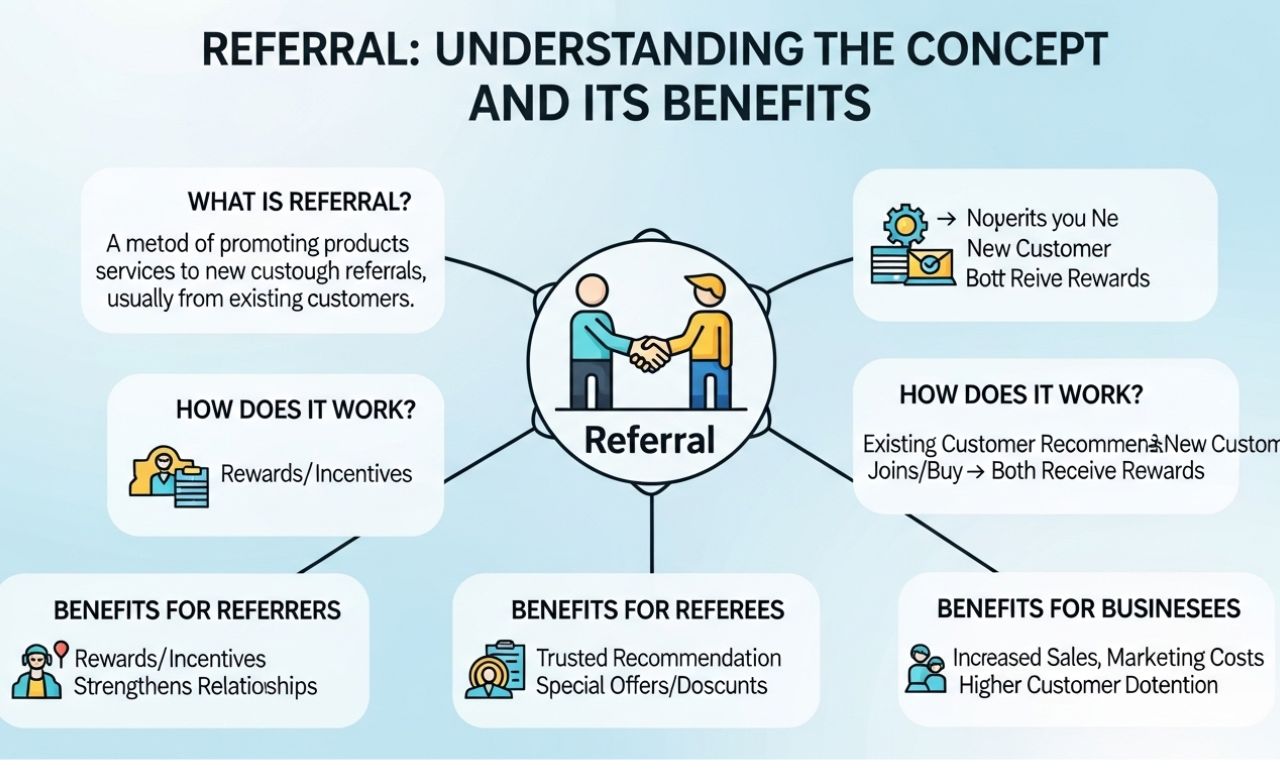
The concept of a referral is widely used in business, healthcare, employment, and marketing. A referral occurs when one person recommends another person, product, or service to someone else, often leading to a new opportunity, client, or connection. Understanding how referrals work and why they are valuable can help individuals and organizations leverage this powerful tool to grow networks, increase trust, and enhance business outcomes.
What Is a Referral?
A referral is essentially a recommendation made by someone who trusts a service, product, or individual. Referrals can take multiple forms:
-
Business Referrals: Customers recommending a company’s products or services to friends or colleagues.
-
Employment Referrals: Current employees recommending potential candidates for a job opening.
-
Healthcare Referrals: Doctors or healthcare professionals directing patients to specialists or clinics.
-
Affiliate or Marketing Referrals: Digital platforms offering incentives for referring new users or customers.
Referrals rely on trust and credibility. A well-placed referral often carries more weight than traditional advertising because it comes from a known and trusted source.
Types of Referral Programs
Many organizations and platforms implement referral programs to encourage recommendations. Some common types include:
-
Customer Referral Programs: Companies reward existing customers for bringing in new clients, often with discounts, cashback, or exclusive perks.
-
Employee Referral Programs: Employers incentivize employees to refer qualified candidates for open positions.
-
Affiliate Referral Programs: Digital marketers or users earn commissions by referring products, services, or subscriptions.
-
Professional Referrals: Professionals like doctors, lawyers, or consultants refer clients to trusted colleagues to ensure quality service.
These programs are designed to leverage networks for mutual benefit, creating a win-win situation for all parties involved.
Benefits of Referrals
Referrals provide several advantages across different sectors:
-
Increased Trust: Recommendations from friends or professionals carry credibility.
-
Cost-Effective Marketing: Businesses save money compared to traditional advertising.
-
Higher Conversion Rates: Referred clients or customers are more likely to engage and purchase.
-
Stronger Networks: Referrals help expand professional and personal networks efficiently.
-
Talent Acquisition: Employee referrals often yield better candidates, reducing recruitment costs and improving retention.
By harnessing referrals, businesses and individuals can enhance growth, strengthen relationships, and increase success rates.
How to Make Effective Referrals
To make a referral that is meaningful and valuable, follow these steps:
-
Understand Needs: Ensure the person being referred meets the needs or expectations of the recipient.
-
Communicate Clearly: Provide all necessary information, including contact details and relevant background.
-
Gain Consent: Confirm that the person you are referring is comfortable with the introduction.
-
Follow Up: Check in to see if the referral was helpful and maintain the connection.
Effective referrals build trust and strengthen your reputation as a reliable connector.
Referral Marketing in the Digital Age
With the rise of social media, apps, and online platforms, referral marketing has become a key growth strategy. Many apps, e-commerce platforms, and subscription services offer referral incentives, such as:
-
Discount codes for new users
-
Free trial extensions
-
Cashback or reward points for referrers
-
Exclusive access to premium features
These programs motivate users to actively refer others, creating organic growth while rewarding loyal customers.
Common Mistakes to Avoid
While referrals are powerful, mistakes can reduce effectiveness:
-
Referring without Permission: Always ensure the referred person is willing to be contacted.
-
Over-Promising: Make sure your recommendation accurately reflects capabilities or benefits.
-
Ignoring Follow-Up: Failing to check back may damage relationships and credibility.
-
Neglecting Personalization: Generic referrals may not carry the same weight as tailored, thoughtful recommendations.
Avoiding these errors helps maintain trust and ensures referrals achieve the desired outcome.
Conclusion
Referrals are a cornerstone of personal and professional networking, marketing, and trust-building. From business growth and employment opportunities to healthcare and digital marketing, referrals connect people and resources effectively. By understanding the types, benefits, and best practices of referrals, you can leverage this powerful tool to build relationships, enhance credibility, and drive success.